
best painkiller for herniated disc
What Is the Best Painkiller for a Herniated Disc? A Safer Decision Guide
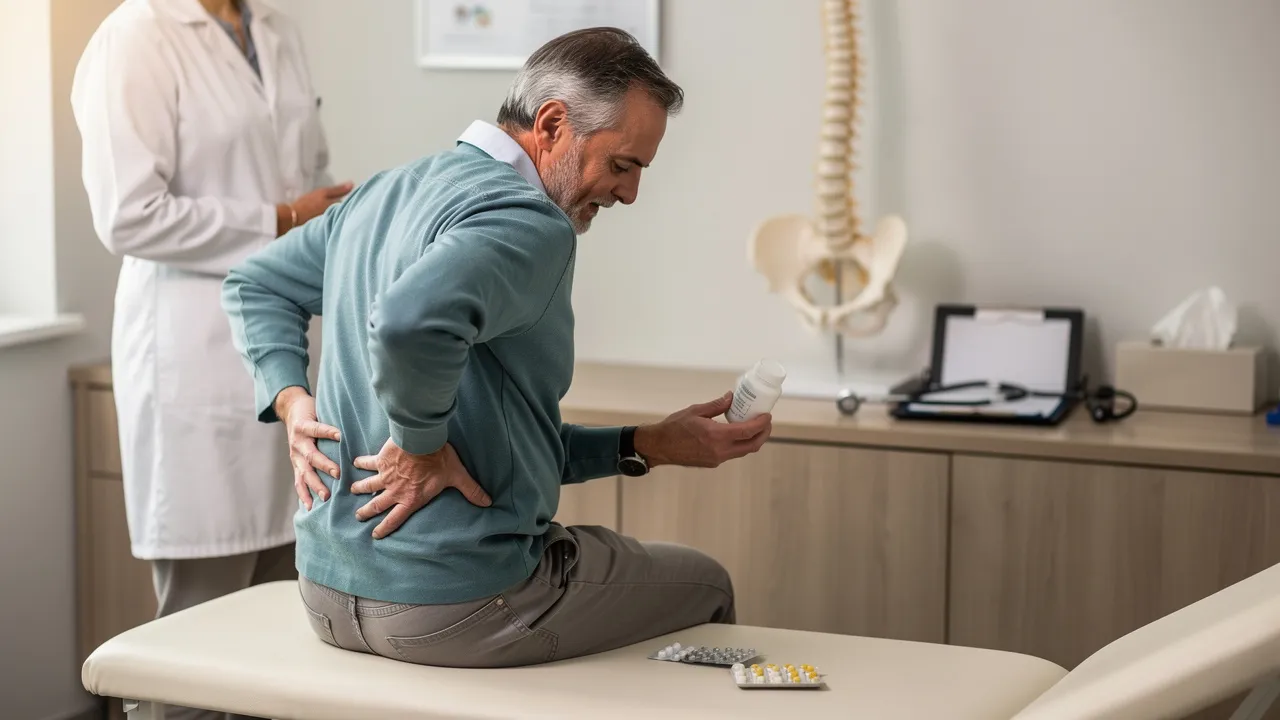
Start with what “best painkiller” really means
Pain relief for a herniated disc is not a universal choice that works for everyone. NICE guidance notes that evidence of benefit for medication in sciatica is limited, particularly when potential harm is considered, so the decision depends on your symptoms, health factors, risk factors, and clinical assessment. A medicine that seems reasonable in one situation may require more caution in another.
Pain relief for herniated-disc symptoms has a narrower job than many people expect. The immediate question is whether a pain-relief approach is appropriate for your circumstances and whether its possible benefit justifies its possible harm. NICE says clinicians may consider analgesia for low back pain or sciatic pain, while also emphasizing that medication benefits for sciatica are limited relative to potential harm. Medication should therefore be considered as part of a decision, not treated as the answer by default.
A useful first conversation focuses on four questions:
- What kind of pain are you trying to manage: back pain, radiating leg pain, or both?
- How much is the pain affecting sleep, movement, work, or ordinary activity?
- What health factors could change the balance between possible benefit and harm?
- What should happen if the pain persists, progresses, or changes?
Those questions move you away from searching for a universal winner and toward a plan that fits the situation being assessed. Do not choose a medicine solely because it is marketed as strong, fast, or commonly used.
Your symptom pattern also gives the medication discussion useful context. Describe where the pain is located, whether it travels, how long it has been present, and what you can no longer do comfortably. These details do not determine which option is suitable, but they help a clinician distinguish the question of temporary symptom relief from the larger question of what assessment or care you may need.
Separate pain relief from treating the disc problem
Pain relief and evaluation of the cause are separate decisions. A pain-relief medicine may be considered for low back or sciatic pain, but choosing analgesia does not answer why your symptoms began, whether they have changed, or what care may be appropriate next. NICE recommends considering alternative diagnoses when symptoms are new or changed and excluding causes such as cancer, infection, trauma, or inflammatory disease.
New or changed symptoms deserve attention because back or radiating pain can require more than routine self-management. That statement does not diagnose your condition. It establishes a practical boundary: if the pattern has changed, arrange clinical assessment rather than using pain relief to conceal the change and continuing indefinitely without review.
Clinical guidelines are decision-support tools, not automatic prescriptions. The VA/DoD low back pain guideline is based on systematic review and multidisciplinary expertise, but it is not intended to define a standard of care or prescribe one exclusive treatment course. Your clinician still has to connect general guidance with your history, examination, health factors, and goals.
Use symptom relief as one part of the next decision. If relief is temporary, incomplete, or accompanied by a changing symptom pattern, the next step is a clinical conversation about evaluation rather than a search for a stronger option.
Compare pain-relief approaches by role and trade-off
Pain-relief approaches can be compared by what they are meant to do, what they cannot establish, and what safety question must be answered before you rely on them. The table is therefore a map of questions, not a ranking of products or a substitute for clinical judgment. Its purpose is to keep symptom management, self-management, and evaluation in their proper roles while making the relevant trade-offs easier to discuss.
| Approach | Possible role in the decision | Main limitation or trade-off | Practical question for you |
|---|---|---|---|
| Analgesia for low back or sciatic pain | Considered for symptom management | NICE notes limited evidence of benefit for sciatica relative to potential harm | What benefit is realistic for your symptoms, and what risks apply to you? |
| NSAID-based analgesia | Considered as a pain-relief option when a clinician judges it appropriate | Potential gastrointestinal, liver, and cardio-renal toxicity require attention to risk factors, assessment, monitoring, and gastroprotection where appropriate | Has a clinician reviewed your relevant risks and the need for monitoring? |
| Tailored self-management | Provides condition information, supports suitable normal activity, and offers reassurance about recovery | Advice must match your needs and capabilities; it does not settle a changing or concerning symptom pattern | What level of normal activity is suitable for you now? |
| Clinical evaluation | Helps address new or changed symptoms and decide whether further care or imaging is relevant | Evaluation is not a promise that a particular treatment will be suitable | What does the examination need to clarify before you choose a path? |
NICE uses the term analgesia broadly rather than naming one universally preferred medicine for sciatic pain. The guidance allows clinicians to consider pain relief while stressing that the evidence of benefit is limited compared with potential harm. That balance matters more than the label on a product. You need to know what the option is intended to help, what conditions could make it unsuitable, and how long you should continue before reassessing.
Self-management belongs in the comparison because pain relief is not the only part of conservative care. The word tailored matters: you should discuss what your current capabilities allow rather than interpreting “normal activities” as a demand to push through severe or changing symptoms.
Clinical evaluation becomes the stronger next step when the main question is no longer simply how to get through the next few hours. If you need to understand a persistent pattern, a progressive pattern, or a change that affects your ability to function, ask what assessment is needed before adding or changing pain-relief measures.
Use the comparison as a conversation tool rather than a self-prescribing chart. Start with the role you need addressed, then ask what information would change the decision. For example, symptom management may call for a discussion of analgesia, while new or changed symptoms call for assessment of possible alternative diagnoses. Keeping those roles separate helps you avoid asking a medicine to answer a clinical question it cannot answer.
To make that conversation concrete, bring a three-part decision note: the symptom you want relief from; the personal or medication-safety questions that need review; and the change that would make you seek reassessment. This note does not select a treatment. It makes the trade-off visible: an option may be discussed for short-term symptom management while a separate evaluation addresses a changing pattern or another possible cause. It also gives the clinician a clear starting point for deciding what should be monitored and when the plan should be revisited.
No option in the table carries the same meaning for every situation. Analgesia may be considered, but limited evidence of benefit and possible harm remain part of the decision. Self-management may accompany care, but it must match your needs and capabilities. Evaluation may clarify the next branch, but it does not guarantee that a particular intervention will follow.
Use extra caution with anti-inflammatory options
NSAID use requires a risk discussion rather than an assumption that anti-inflammatory action makes an option automatically suitable. NICE advises clinicians to consider limited evidence of benefit, potential harm, and possible gastrointestinal, liver, and cardio-renal toxicity when prescribing an NSAID for sciatica.
Age and other individual risk factors can change how the decision should be approached. NICE recommends appropriate clinical assessment, ongoing monitoring of risk factors, and consideration of gastroprotection where appropriate. Those conditions are part of the decision, not technical details to skip after choosing a product.
Before relying on an anti-inflammatory option, ask a qualified clinician or pharmacist to review the factors that apply to you. Ask what possible benefit is being considered, what warning signs would require a change in plan, whether monitoring is needed, and whether protective treatment is appropriate. Do not turn a general description of NSAID risks into an individualized instruction to start, stop, or switch a medicine.
The central trade-off is simple to state but cannot be decided from the product name alone: possible pain relief must be weighed against possible harm and your own risk factors. If that assessment has not happened, do not assume that an over-the-counter status settles the question.
Ask the safety questions before taking or combining medicines
A medication conversation should connect your pain pattern with your health circumstances. NICE specifically calls for attention to potential harm, gastrointestinal, liver, and cardio-renal toxicity, age-related risk factors, clinical assessment, monitoring, and gastroprotection where appropriate. The VA/DoD guideline also emphasizes that clinical guidance supports decision-making without prescribing one exclusive course.
Take these questions to a clinician or pharmacist:
- What type of pain is the proposed option intended to address?
- What personal risk factors should change the decision for you?
- Does your age affect the balance between possible benefit and harm?
- What assessment should happen before you use the option?
- What monitoring would be needed if you continue it?
- Would gastroprotection be appropriate in your situation?
- If you are considering more than one medicine, should a qualified professional review the combination first?
- What change in your symptoms should lead you to stop self-managing and seek assessment?
These questions do not produce a prescription. They help you understand the conditions attached to a safe decision.
Your medication conversation is easier to make specific when you describe the symptom pattern clearly. Note where the pain travels, what activities it limits, when it changed, and what you have already tried. Bring the names of medicines or supplements you use so a qualified professional can decide what information matters. Do not infer compatibility or suitability from a familiar product name.
Ask for a review before combining medicines or extending self-treatment when pain remains persistent or progresses. The goal is not to find the strongest option. The goal is to make the next choice with the relevant risks, monitoring needs, and clinical questions in view.
Bring the same questions if you are considering an option that seems familiar or easy to obtain. Familiarity does not answer whether it fits the current pain pattern, health factors, other medicines, or need for monitoring. A qualified professional can also help separate two decisions that are often blended together: whether symptom relief is reasonable now and whether the symptoms require examination for a different or more serious cause. That separation is especially useful when relief is partial, short-lived, or followed by a change in function.

Pair symptom relief with measured self-management
Your practical task is to clarify what suitable activity means for you. Ask which ordinary movements you can continue, which activities need modification, and what change should prompt a review. A general instruction to remain active cannot replace attention to a symptom pattern that is new, changed, persistent, or progressive. This keeps activity advice connected to capability rather than turning it into a test of endurance. It also leaves room for the plan to change when the symptom pattern changes. The useful question is not whether you can force yourself through discomfort, but whether the activity remains consistent with the plan being discussed and whether a new limitation needs clinical attention.
Medication may be considered alongside self-management, but NICE emphasizes that benefits for sciatica are limited relative to potential harm. Pain relief should therefore support a broader plan rather than become a reason to ignore ongoing symptoms or keep changing products without clinical input.
Use a simple daily check: record whether your pain pattern is stable, whether ordinary activity remains possible, and whether your function is improving, unchanged, or worsening. That record gives your clinician a clearer basis for deciding whether continued self-management is reasonable.
Measured self-management means matching activity to your current capabilities, not treating activity as a test of how much pain you can tolerate. Keep the advice tied to your actual function. If an activity changes the pattern of symptoms or leaves you less able to manage ordinary tasks, record that change and bring it into the next clinical discussion.
Know when continued self-management is no longer enough
Persistent or progressive pain should move the decision from repeated self-treatment toward clinical evaluation. NICE recommends considering alternative diagnoses when symptoms are new or changed, while ACR imaging guidance addresses subacute or chronic low back pain with or without radiculopathy when symptoms persist or progress during or after six weeks of optimal medical management in people who may be candidates for surgery or another intervention.
Six weeks is not a universal waiting period for every person with back or radiating pain. The ACR statement applies to a defined clinical context: persistent or progressive symptoms, a subacute or chronic pattern, and possible consideration of surgery or intervention after medical management. You should not delay assessment if symptoms change or raise concern simply because a particular time period has not passed.
Function-limiting pain is a practical reason to ask for assessment rather than continue adjusting pain relief on your own. If pain prevents ordinary activity, keeps returning despite self-management, or is becoming harder to control, tell a qualified clinician what has changed and how it affects you. A review can address both symptom relief and the question of whether another diagnosis needs consideration.
Arrange a clinical evaluation when pain remains persistent, becomes progressive, or limits your ability to function. Bring your symptom timeline and medication questions so the appointment can address the whole decision rather than only the next dose.
Use the pattern to choose the next branch:
- If the symptoms are stable and manageable, continue the tailored plan and keep track of function.
- If the symptoms persist or limit ordinary activity, arrange a clinical evaluation.
- If the symptoms progress or change, seek assessment rather than extending self-treatment by default.
The six-week context applies to a specific ACR imaging and intervention scenario. It is not permission to wait through a concerning change.
Describe the branch in observable terms rather than trying to assign yourself a diagnosis. Record whether the pain is following the same path, whether its intensity or reach has changed, and which ordinary activities are affected. At an evaluation, that information helps connect the symptom timeline to the examination and any decision about further care. It also prevents the six-week reference from becoming a stand-alone rule: the relevant question is whether the defined clinical context applies, not whether the calendar alone has reached a threshold.
Seek prompt medical evaluation for concerning changes
New or changed back or radiating symptoms deserve prompt medical evaluation when you cannot explain the change through your established pattern. NICE recommends considering alternative diagnoses in that situation and excluding causes such as cancer, infection, trauma, or inflammatory disease. These possibilities are reasons for clinical assessment, not diagnoses you should make from a symptom list.
Persistent or progressive symptoms also change the next-step question. The same guidance addresses persistent or progressive symptoms in a subacute or chronic setting after medical management when surgery or intervention may be under consideration.
Suspected emergencies should be handled through emergency services rather than a medication comparison or routine scheduling process. If you suspect an emergency, contact local emergency services rather than waiting to see whether another pain-relief product helps.
Before publication, that list needs urgent clinician or editorial verification. It should specifically address bowel or bladder changes, saddle numbness, and rapidly progressive weakness, and should tell readers to seek emergency assessment rather than wait for a routine appointment when those criteria are met. Until that verification is complete, do not use this guide to decide that a serious neurologic change is safe to manage at home; use immediate local medical guidance.
A changing symptom pattern is enough to justify asking for assessment; you do not need to settle the diagnosis before seeking help. Describe when the change began, how it differs from your earlier symptoms, and whether it is affecting movement or ordinary activity.
Use prompt assessment when the question has changed from “How can I manage this?” to “Why is this changing, and what needs to happen next?” Clinical review can address alternative diagnoses and determine whether further evaluation, including imaging, is relevant to a possible intervention decision.
Understand when imaging can inform the next decision
Imaging is not automatically the next step for every episode of back pain. The American College of Radiology cites evidence that routine back imaging does not provide clinically meaningful benefits and can expose you to unnecessary harms. That makes the clinical question matter: imaging should be connected to what your symptoms and examination suggest may need to happen next.
The recommendation does not say that every person with a herniated disc needs immediate imaging.
The ACR imaging variant for subacute or chronic low back pain addresses possible surgery or intervention candidates whose symptoms persist or progress during or after six weeks of optimal medical management. That condition matters because a time period by itself does not decide whether imaging is useful; the symptom pattern and possible treatment decision give the time period its clinical context.
Ask these questions before arranging or repeating imaging:
- What clinical question is the scan intended to answer?
- Would the result change the treatment or referral decision?
- Do your symptoms and examination suggest a possible intervention pathway?
- If the scan does not show a finding that changes care, what is the next plan?
A clear answer keeps imaging connected to care rather than treating a scan as a substitute for evaluation.
The useful distinction is between imaging for a defined clinical question and imaging as a default response to pain. Persistent symptoms with radiculopathy or spinal-stenosis symptoms may make MRI or CT relevant when surgery or an epidural injection is under consideration. Routine imaging without that decision context can expose you to harms without providing a clinically meaningful benefit.

Consider evaluation-based non-surgical spine care
At RegenCore Method, we offer image-guided, non-surgical options for spinal disc treatment related to back and neck pain. That describes the type of care we provide; it does not establish that a particular option is suitable for your symptoms or that it will produce a particular result.
Our spinal disc treatment addresses degenerative disc disease, disc bulges and herniations, sciatica and radiating leg pain, facet and SI joint pain, and chronic low back or neck pain. It also addresses situations in which you want to discuss avoiding fusion or opioids. The relevant question is whether an evaluation supports discussing this type of care after urgent concerns and medication-safety questions have been addressed.
A non-surgical spine conversation is an option to consider, not a replacement for urgent medical care. If your symptoms are new, changed, persistent, or progressive, start with the level of assessment those symptoms require. If an evaluation supports a non-surgical discussion, you can then ask what image-guided options exist, what they are intended to address, and what boundaries apply.
RegenCore Method offers this spinal disc treatment pathway in Palo Alto and San Francisco, California. You can use the location that fits your circumstances for a discussion of whether evaluation-based care is appropriate to explore. The Palo Alto location is at 2248 Park Blvd., Palo Alto, CA 94306. That address is a practical location detail, not evidence that the pathway is suitable for a particular person. Before arranging a routine evaluation, keep the urgency boundary in view: a booking conversation should not replace immediate care for a suspected emergency or assessment of a new or worsening pattern.
The possible fit is determined through evaluation, not by the label “herniated disc” alone. Bring your symptom history, prior imaging, and questions about non-surgical care. The discussion can then stay focused on what your symptoms and available findings support, while urgent or unrelated concerns remain directed to the appropriate level of medical care.
See what a spinal disc evaluation can include
Those components make the appointment a structured conversation about your symptoms and available information rather than a decision based on the phrase “herniated disc” alone.
Your history gives the evaluation its starting point. Describe when the pain began, whether it travels, what has changed, what activity it limits, and what pain-relief measures you have considered. The hands-on orthopedic examination then adds clinical information that cannot be supplied by a medication label or an imaging report alone.
Prior MRI or X-ray images can be reviewed as part of the evaluation, and diagnostic ultrasound is included in the stated evaluation process. Bring prior reports and imaging when available so the discussion can focus on how the findings relate to your current symptoms. A scan should still answer a clinical question rather than become the entire assessment.
The evaluation concludes with a personalized treatment and recovery plan rather than an automatic promise of treatment. Ask what the findings support, what remains uncertain, which options are non-surgical, and what would require a different level of medical care. Those questions help you decide what to do next without assuming suitability in advance.
Ask the evaluator to identify the decision that each component informs. The history and examination address the current symptom pattern; prior imaging can be considered in relation to that pattern; and the plan should state what is being proposed, what remains uncertain, and what would prompt a different level of care. Framing the appointment this way helps you evaluate an option without assuming that the presence of a disc finding, or the availability of an image-guided option, settles the decision by itself. That makes the next step a reasoned choice based on the evaluation, rather than a reaction to a search result or a promise implied by a treatment label.
Prepare for the appointment with a short symptom timeline and a list of the medicines or supplements you use. Include what makes the pain better or worse, whether it travels, how it affects ordinary activity, and what has changed. Bring prior MRI or X-ray reports and images when available. This gives the history, examination, imaging review, and plan a shared starting point.
Choose the next conversation, not a guaranteed outcome
The safer decision path is practical: compare pain-relief options by likely role and possible harm, use tailored self-management within your capabilities, and arrange clinical evaluation when symptoms are new, changed, persistent, progressive, or function-limiting. Imaging becomes a question tied to possible treatment decisions rather than an automatic response to back pain.
Evidence comparing direct access with physician-first access does not replace screening or determine whether you need routine therapy, medical assessment, or another form of care. A qualified clinician must decide whether a particular evaluation or treatment is suitable for your symptoms and health factors. Suspected emergencies still require emergency medical care rather than routine self-management.
Questions to discuss before choosing pain relief
What is the best painkiller for a herniated disc?
There is no single best option for everyone. The appropriate approach depends on whether symptoms are mainly back pain, radiating leg pain, or both, along with your health history, other medicines, risk factors, and clinical assessment. Pain relief may reduce symptoms, but it does not establish the cause or treat the disc problem itself.
Can pain medication heal a herniated disc?
Pain medication is intended to help manage symptoms; it does not by itself confirm healing or resolve the underlying disc issue. If relief is incomplete, short-lived, or needed repeatedly, discuss evaluation and a broader conservative care plan with a qualified clinician rather than simply escalating self-treatment.
When should herniated-disc pain be evaluated instead of treated at home?
Arrange clinical assessment when pain is persistent, progressive, newly changed, or limits ordinary activity despite reasonable self-management.
What should I bring to a spinal disc evaluation?
Bring a brief timeline describing when symptoms began, where they travel, what has changed, and which activities are limited. List the medicines and supplements you use, and bring prior MRI or X-ray reports and images when available. This helps the evaluation connect your symptoms with examination findings and any relevant imaging.
Next step
Have a question for RegenCore?
Concierge regenerative & orthobiologic orthopedics in San Francisco and Palo Alto. Research-backed, non-surgical treatment — PRP, bone marrow concentrate (BMAC), stem cell therapy, shockwave, EMTT and spinal disc care — to help the body heal itself.
Get in touch