
hot or cold therapy for back pain
Hot or Cold Therapy for Back Pain: How to Choose Safely
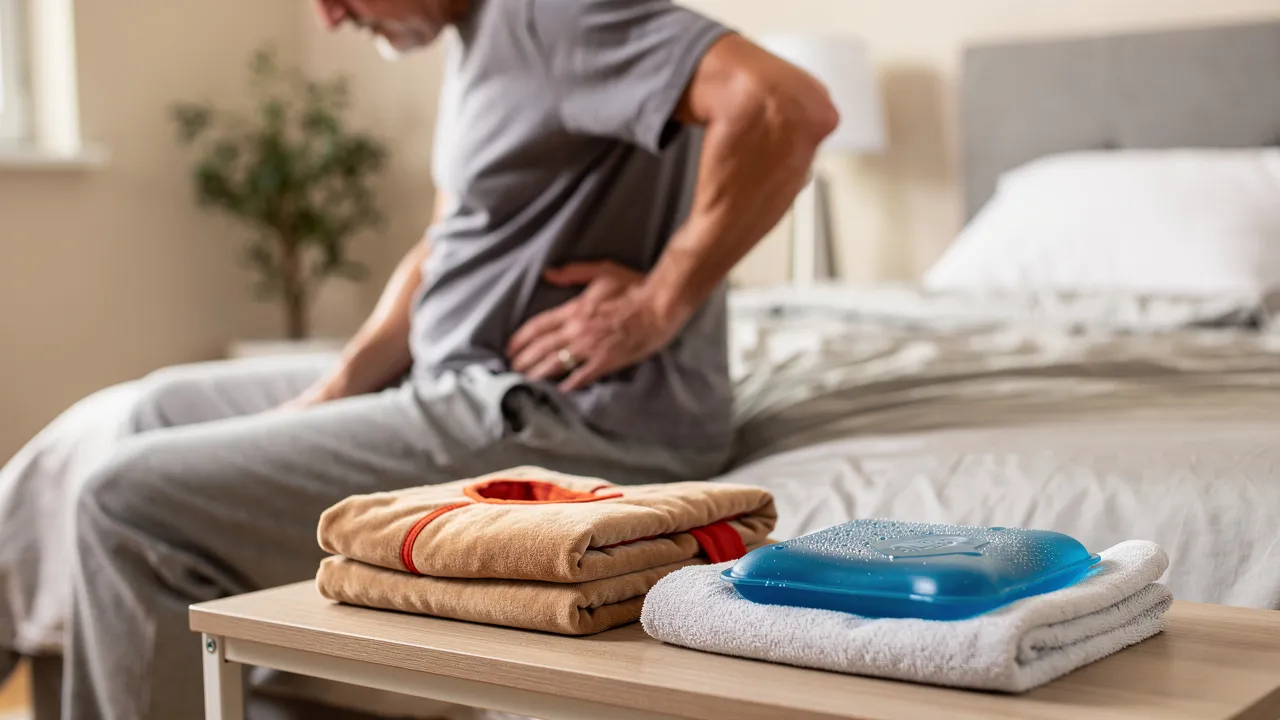
Start with the immediate comfort decision
Heat and cold therapy are usually a comfort decision, not a way to identify what is causing your back pain. Heat and cold are commonly used for low-back pain in clinical care and at home, but the evidence supporting them is limited. That combination can make the choice feel more confusing than it needs to be: you want short-term relief, while the underlying problem may still require a different kind of assessment.
Low back pain can affect daily activities, quality of life, and work productivity. A warm shower, heating pad, or cold pack may make an uncomfortable period easier to manage, but temporary comfort does not establish whether the pain comes from muscles, joints, discs, or another source. Keep those questions separate: which option feels tolerable now, and whether your symptoms call for evaluation.
The immediate low-back-pain decision can start with three observations: when the pain began, what the area feels like, and how your symptoms respond to gentle movement. A newer, hot, or swollen pattern may lead you to consider cold cautiously. Older, stiff, or achy discomfort may lead you to consider heat. If neither option helps, stop treating the modality choice as the main answer.
Heat or cold may temporarily relieve symptoms, but persistent or concerning back pain may still need evaluation. A heated wrap applied for eight hours or an electric blanket applied for 25 minutes may provide a small short-term pain benefit over no heat in some mixed acute and sub-acute low-back-pain populations. That finding applies to a particular intervention and outcome; it does not establish that every heating method will help or that heat resolves the underlying cause.
Sort the pain by timing and pattern
The timing of your back pain gives you a first-pass way to compare heat and cold. Cold therapy is generally used during the acute phase of an injury, especially during the first 48 to 72 hours. Once that acute phase has passed, usually within a couple of days, heat may be appropriate. These are general patterns rather than a diagnosis of your back pain.
Pain that began after a specific event may fit the acute pattern more closely than pain that has been building gradually. Use timing as one part of the decision, not as proof of which tissue is involved. A simple check is:
- Note when the pain started.
- Notice whether the area feels hot, swollen, stiff, or achy.
- Pay attention to whether an option makes gentle movement feel more comfortable.
The heat-versus-cold choice can start with this practical comparison:
| Option | Pattern that may fit | What to expect | Boundary |
|---|---|---|---|
| Heat | Older, stiff, or achy discomfort | Warmth may ease stiffness and tightness | Use it for temporary comfort, not as proof of a treated cause |
| Cold | New, hot, or swollen discomfort, especially during an acute injury | A cautious trial may provide comfort | Evidence specific to low-back pain is limited |
| Neither | Both options feel unhelpful or symptoms are severe, worsening, or concerning | Reassess the need for evaluation | Do not keep switching modalities instead of seeking care |
The choice can vary with the type and cause of lower back pain. If the pattern remains unclear and the pain persists, evaluation is more useful than repeatedly switching between modalities.

Choose heat when stiffness and tightness dominate
Heat can fit low-back pain that feels stiff, tight, or achy rather than newly hot or swollen. Warmth, especially wet heat such as a warm shower, often feels soothing and can help relax tight muscles and ease stiffness. Superficial heat increases tissue temperature and may provide pain relief, muscle relaxation, or reduced muscle spasms.
Heat may temporarily relieve pain, raise the pain threshold, and relax muscles. Those effects can make movement feel more manageable for a while. They do not establish the source of your pain or show that heat has treated a disc problem or another underlying condition.
If your low-back pain is chronic, heat may be a more comfortable option for day-to-day stiffness and muscle tightness. That preference can give you a reasonable starting point when warmth feels more comfortable than cooling. Use your response as feedback: if heat eases stiffness without worsening symptoms, it may serve as a temporary comfort measure; if it increases discomfort, stop using it.
Heat does not become the right choice simply because pain has lasted a long time. Ongoing pain, radiating symptoms, or reduced function still deserve attention based on the whole symptom pattern rather than on your preference for warmth.
Use cold cautiously for a new or swollen pattern
Cold can be a reasonable cautious trial when low-back pain is new, hot, or swollen, particularly during the acute phase of an injury. A practical pattern-based recommendation usually favors ice for those features. The research-specific boundary matters, though: evidence for cold treatment of low-back pain is limited, with only three poor-quality studies in one review, so its effectiveness is uncertain.
Cold should therefore be treated as a temporary comfort option, not as a proven treatment for a disc problem or a reliable way to distinguish one cause of back pain from another. Studies also conflict about whether heat or cold is better for low-back pain. If cold does not help, worsens your symptoms, or leaves the pattern concerning, stop relying on it and reassess the need for professional care.
Cold application has basic limits that protect your skin and help you judge your response. Apply cold for no more than 20 minutes at a time. For the first two days after an injury, one source describes using it four to eight times a day, but that general schedule is not an individualized instruction for every back-pain situation.
Avoid cold therapy if you have cold intolerance, impaired circulation, or a condition such as Raynaud’s disease. Check the treated skin for pallor, numbness, or cyanosis. Do not put ice or a cold pack directly on your skin; use a towel or pillowcase as a barrier instead.
Keep the evidence and its limits in view
A review of superficial heat and cold for low-back pain included nine trials involving 1,117 participants. The review found a small short-term advantage for some forms of heat, but it did not establish a universal choice for every type of back pain. In two trials involving 258 participants with mixed acute and sub-acute low-back pain, heat wrap therapy significantly reduced pain after five days compared with oral placebo. The weighted mean difference, which measures the difference in pain scores between groups, was 1.06, with a 95% confidence interval of 0.68 to 1.45 on a scale from 0 to 5.
The result measures pain in a particular study population and over a particular period. It does not mean that every heating method will produce the same result, that the effect will continue, or that heat addresses the underlying source of pain.
Cold treatment has a thinner evidence base for low-back pain. The review concluded that evidence was insufficient to determine the effects of cold, and studies conflicted about differences between heat and cold. The available findings do not support treating cold as generally superior for new low-back pain, even though a practical symptom pattern may make a cautious trial reasonable.
Evidence supporting superficial heat and cold for low-back pain is limited, and higher-quality studies are needed. That limitation should change your expectations: temporary relief can be useful, but a comfortable response is not proof of healing, and a lack of response does not by itself identify the cause.
Continuous, low-level heat therapy may provide pain relief and improve muscular strength and flexibility in non-specific mild-to-moderate low back pain, according to a separate review. Another review described moderate evidence for a small short-term reduction in pain and disability from heat-wrap therapy in mixed acute and sub-acute low-back pain. These findings concern defined populations and interventions; they should not be widened to promise relief for sciatica, a herniated disc, degenerative disc disease, or severe back pain.
The practical conclusion is modest. Choose heat or cold by the immediate pattern and your response, while allowing the persistence, severity, and associated symptoms to determine whether home comfort measures remain reasonable.

Apply either option with basic safeguards
Cold treatment needs a barrier, a time limit, and skin monitoring. Use a towel or pillowcase between ice or a cold pack and your skin. Keep an application to no more than 20 minutes, and check the skin for pallor, numbness, or cyanosis. Stop if your body responds poorly rather than trying to push through discomfort.
Cold treatment also needs extra caution if you have cold intolerance, impaired circulation, or Raynaud’s disease. Those conditions are boundaries against casual self-treatment with cold, not details to ignore when the pain is new.
Heat treatment should feel comfortably warm rather than painfully hot. Use heat for 15 to 20 minutes at a time, keep a barrier between a heating pad and your skin, and do not lie on the pad. Temperatures above 113 degrees Fahrenheit may be painful, and temperatures above 122 degrees Fahrenheit may burn the skin.
Do not fall asleep with a heating pad or ice pack. Either treatment can damage your skin when contact continues without your awareness. A general self-care rule is to wait 20 minutes before applying ice or heat again, giving you time to notice whether the first application helped.
Your skin response and symptom response are the immediate checks that matter. Use a protective layer, pay attention to numbness or unusual skin color, and stop the application if it causes more pain or irritation. Do not use a longer, hotter, or colder application to compensate for a lack of relief. A modality that repeatedly fails to help should not become the center of your self-care plan.
Judge the result by comfort and movement
Your response to heat or cold can help you decide whether to continue a temporary comfort measure. If one option makes movement feel easier without worsening symptoms, you may use it within the basic limits described above. If an option increases pain, causes concerning skin changes, or leaves you feeling worse, stop using it.
For your next decision, note three practical details:
- When the pain began and whether it followed a specific event
- Which option you used and whether you stayed within the time limit
- Whether movement felt easier, unchanged, or worse afterward
This short record can help you describe the pattern if the pain persists. Movement comfort is not the same as recovery from the underlying problem. Heat or cold may temporarily relieve symptoms, while persistent or concerning back pain may still need evaluation.
Neither option is a useful answer when the pain is severe, worsening, or accompanied by neurological or systemic symptoms. Neither option is a substitute for assessment when pain continues despite initial self-care. If heat and cold both fail to help, stop switching between them and focus on the next appropriate level of care.
Acute low-back pain that does not respond to initial management may benefit from nonpharmacologic treatments such as heat, massage, or spinal manipulation. Persistent low-back pain without obvious pathology may also call for options such as exercise, massage, or multidisciplinary rehabilitation.
Know which symptoms require prompt evaluation
Back pain requires prompt medical evaluation when it comes with warning features rather than a simple, improving discomfort pattern. Seek prompt evaluation for:
- Severe or worsening pain
- Pain that radiates below the knee
- Numbness or weakness in a limb
- Bowel or bladder dysfunction
- Fever or signs of infection
- Unexplained weight loss
- Pain after significant trauma
- A history of cancer with new back pain
- Progressive neurological deficits
- Suspected cauda equina syndrome
These features change the decision from choosing a home comfort measure to obtaining medical attention. Do not use heat or cold to delay that step.
The warning signs above matter even if heat or cold gives brief relief. A temporary reduction in symptoms does not remove concern when pain is severe or worsening, travels below the knee, follows significant trauma, or occurs with neurological or systemic changes. Seek prompt medical evaluation rather than continuing to adjust a home modality.

Recognize when persistent or disc-related pain needs assessment
Persistent back pain that does not respond to initial care deserves a broader conversation than whether to use heat or cold. Most low-back pain does not require immediate diagnostic imaging and can be managed in primary care. That general point does not mean you should ignore pain that continues, limits activity, returns repeatedly, or includes symptoms that suggest a possible disc-related problem.
If acute low-back pain does not respond to initial management, nonpharmacologic treatments such as heat, massage, or spinal manipulation may help. For persistent low-back pain without obvious pathology, options such as exercise, cognitive behavioral therapy, mindfulness-based stress reduction, massage, spinal manipulation, acupuncture, or multidisciplinary rehabilitation may help. The appropriate option depends on your symptoms and the question an evaluation needs to answer.
Disc-related symptoms can include back pain, neck pain, sciatica, radiating leg pain, or pain associated with a disc bulge, herniation, or degeneration. Those descriptions do not confirm a diagnosis, but they can give you a reason to seek spinal evaluation when symptoms persist or interfere with daily life.
At RegenCore Method, we offer image-guided, non-surgical options for spinal disc treatment related to back and neck pain. We address degenerative disc disease, disc bulges and herniations, sciatica and radiating leg pain, facet and SI joint pain, and chronic low back and neck pain. The conditions covered by our service do not mean that any particular procedure is appropriate for you.
Our RegenCore Method evaluation includes a thorough history, hands-on orthopedic exam, diagnostic ultrasound, review of prior MRI or X-ray imaging, and a personalized treatment and recovery plan. This process places your symptoms and existing imaging in a broader clinical context rather than letting the choice of a heating pad or ice pack stand in for assessment.
Our locations are in Palo Alto and San Francisco, California. If you are in Palo Alto or the broader Bay Area and persistent or possible disc-related pain has moved beyond reasonable home comfort care, an evaluation provides a setting for discussing your spinal symptoms and available non-surgical options.
Choose a clearer next step for ongoing pain
Heat or cold can be useful as cautious, temporary comfort measures when the pain pattern supports a trial and your skin and symptoms tolerate it. New, hot, or swollen pain may lead you toward cold, while older, stiff, or achy pain may lead you toward heat. Evidence remains limited, especially for cold in low-back pain, so neither option should be treated as a cure or as a substitute for evaluation.
Stop relying on home care when pain is severe, worsening, persistent, radiates below the knee, follows significant trauma, or comes with numbness, weakness, bowel or bladder dysfunction, fever, or unexplained weight loss. A qualified professional should decide your individual suitability for an evaluation or treatment approach. If ongoing or possible disc-related symptoms are the concern, the next step is a professional spinal discussion rather than another round of trial and error.
If you are in Palo Alto or the broader Bay Area and need more than temporary home comfort, we offer image-guided, non-surgical spinal disc options and evaluations through RegenCore Method. Our evaluation includes history, orthopedic examination, diagnostic ultrasound, prior imaging review, and a personalized treatment and recovery plan. Use that conversation to understand which options may fit your symptoms rather than assuming that heat, cold, or a particular procedure is right for you.
Questions to consider before relying on heat or cold
How common is hot or cold therapy for back pain, and who uses it most often?
Both heat and cold are commonly used by people with low-back pain and by health professionals, but the available material does not establish reliable rates or show which age, sex, diagnosis, or activity group uses them most often. Bay Area-specific utilization data are also unavailable. Treat popularity as context, not proof that either option is appropriate for your symptoms.
What should I do if neither heat nor cold helps my back pain?
Stop switching between modalities if both are ineffective, worsen your symptoms, or make movement harder. Reassess the timing, severity, and associated symptoms instead of extending applications or using higher temperatures. Pain that persists despite initial self-care may warrant professional evaluation, while severe or worsening pain, pain below the knee, numbness or weakness, bowel or bladder problems, fever, unexplained weight loss, or pain after trauma calls for prompt medical evaluation.
What can a spinal evaluation clarify when back pain may be disc-related?
An evaluation can place your symptoms and existing imaging in clinical context rather than relying on temporary relief from heat or cold. RegenCore Method describes an assessment that includes a history, hands-on orthopedic examination, diagnostic ultrasound, review of prior MRI or X-ray imaging, and a personalized treatment and recovery plan. This process does not by itself establish that a particular procedure is appropriate.
Next step
Have a question for RegenCore?
Concierge regenerative & orthobiologic orthopedics in San Francisco and Palo Alto. Research-backed, non-surgical treatment — PRP, bone marrow concentrate (BMAC), stem cell therapy, shockwave, EMTT and spinal disc care — to help the body heal itself.
Get in touch