
non surgical spine care
Non-Surgical Spine Care: A Safe Decision Guide for Disc-Related Back and Neck Pain
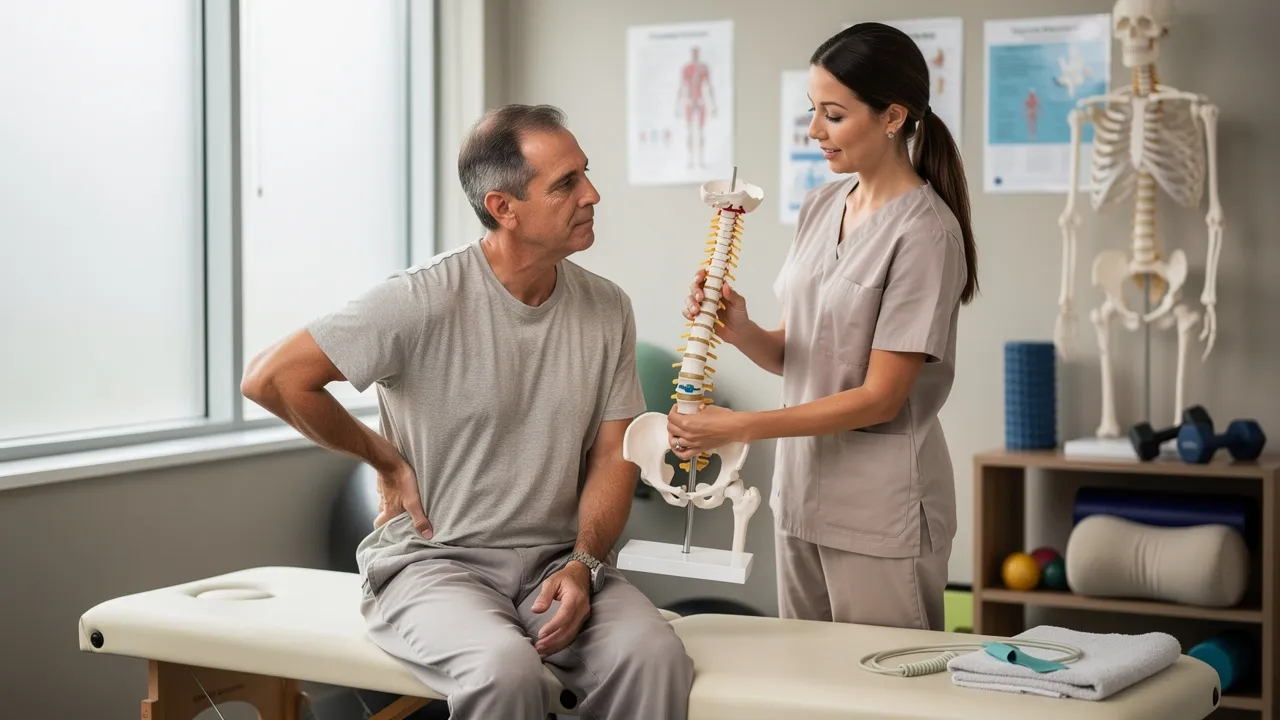
Start by sorting urgency from a routine decision
Back or neck pain can require either immediate assessment or a planned spine evaluation, and the first decision is whether warning signs make routine care unsafe to treat as the starting point. Severe or changing neurological symptoms deserve priority over treatment comparisons. If you have any warning sign below, seek the level of qualified help described rather than waiting for a routine appointment.
Emergency warning signs include saddle anesthesia, new bladder or bowel dysfunction, symptoms in both legs, or rapidly progressive neurological changes. These findings warrant immediate emergency assessment because they can signal serious nerve involvement. Do not manage these symptoms as ordinary disc pain while waiting for a consultation.
Severe or worsening weakness, including foot drop, warrants urgent referral rather than watchful waiting. Leg or foot numbness or weakness is described as a serious disc-related symptom, and one clinical recommendation advises seeing a spine specialist within 3 days. Worsening neurological deficits, new limb weakness, or confirmed spinal instability on imaging also require surgical evaluation. Fever, significant trauma, prior cancer, unexplained weight loss, or immunosuppression call for prompt medical assessment.
Fever, weakness, obvious sensory deficits, a true positive straight-leg raise, or writhing pain warrant additional work-up rather than routine treatment as non-traumatic back pain. If those warning signs are absent, a planned evaluation can help sort nonspecific pain from a possible disc, nerve, or spinal-stenosis problem. The absence of an emergency sign does not establish the cause of your symptoms; it simply changes the urgency of the next conversation.
Understand what a disc problem can explain
A herniated disk happens when the soft center pushes through a crack in the disk’s tougher outer portion and may irritate or compress a nearby spinal nerve root. That process can produce back pain, pain, numbness, or weakness in an arm or leg. The same general description can apply to neck or low-back symptoms, but symptoms alone do not prove that a herniated disk is the source.
Lumbar disk herniation is one of the main causes of sciatica, can occur without symptoms, and often spontaneously regresses without surgery. Pain radiating below the knee can imply a herniated disk in the low back, while pain radiating below the elbow can imply a herniated disk in the neck. The cited clinical recommendations advise seeing a spine specialist within 2 weeks for either pattern of radiating pain.
Herniated disks get better on their own or with nonsurgical treatment for 9 out of 10 people. A separate cohort study reports that 90% of sciatica cases due to lumbar disk herniation resolve with conservative measures. These figures describe selected clinical populations and do not determine what will happen with your symptoms, especially if pain is worsening, disabling, or accompanied by weakness.
Your symptom pattern is a reason to arrange assessment, not a diagnosis you can make from pain location alone. A focused history, physical examination, and neurological assessment help distinguish nonspecific back pain from a possible specific spinal cause, radiculopathy, or spinal stenosis. Bring the timing, location, severity, and triggers of your symptoms so the evaluation can address the clinical question rather than only the scan label.
Map conservative, interventional, regenerative, and surgical paths
Treatment pathways for disc-related pain differ by purpose, invasiveness, and evidence boundary.
| Pathway | What it can include | How to use the distinction |
|---|---|---|
| Conservative care | Medication, physical therapy, activity modification, lifestyle adjustments, and education | This is often the starting pathway when the clinical picture does not require urgent intervention. |
| Interventional care | Epidural steroid injections and other targeted pain-management procedures | These options may address symptoms or inflammation and require assessment of the relevant anatomy and risks. |
| Regenerative care | Options such as lumbar intradiscal PRP, mesenchymal stem-cell injections, or lumbar epidural PRP | Regenerative therapies remain an evolving field with early clinical validation; the cited guideline summary reports Level III evidence for these lumbar applications. |
| Surgery | An operation to address a structural or neurological problem | Surgery enters the discussion when symptoms, findings, or failure of selected nonsurgical care make a surgical assessment appropriate. |
Conservative treatment for lumbar disc herniation can include physical therapy, medication, and infiltrations. Nonsurgical options can also include activity modification, lifestyle adjustments, epidural steroid injections, and interventional pain-management procedures. Physiotherapy and medication remain first-line nonsurgical treatment options for lumbar discogenic pain. Most people do not need surgery to relieve herniated-disk symptoms, although persistent symptoms may call for other nonsurgical treatment options.
Across the reviewed guidelines for herniated lumbar disks, cognitive behavioral therapy and nonsteroidal anti-inflammatory drugs received positive recommendation scores of 2.2 and 2.0, respectively, while physical therapy and exercise received moderate scores of 1.6 and 1.2. These scores describe the reviewed guideline comparison rather than a personalized treatment ranking. They should help you ask why an option fits your findings, not replace an examination.
A separate meta-analysis found that surgery can provide faster early pain relief for acute sciatica, while the difference between surgery and conservative care becomes much smaller over time. The pathway decision therefore depends on urgency, neurological findings, functional limits, and response to care rather than on the word regenerative, injection, or surgery alone.
You can make the comparison more useful by asking what each proposed option is intended to address and what would cause the plan to change. Ask whether the purpose is symptom management, rehabilitation, an image-guided procedure, a discussion of regenerative care, or correction of a structural problem. Regenerative care is not a synonym for every treatment delivered without an operation, and early clinical validation does not establish that it will suit your condition. Keep the treatment label separate from the clinical reason for considering it.
Use the expected course without turning it into a deadline
Recovery from disc-related symptoms does not follow one universal clock. Herniated disks usually heal on their own within four to six weeks, while a large proportion of people with disc-related radiculopathy improve over several weeks to a few months. Herniated disk material also frequently resorbs spontaneously. These ranges describe general patterns, not a deadline you should use to postpone assessment when symptoms worsen or interfere substantially with daily life.
Surgery and conservative treatment can have different short-term and longer-term profiles. In a prospective cohort study, surgery relieved pain more quickly, with a difference at 3 weeks that was no longer present after 3 months; both surgical and conservative treatment had long-term beneficial effects on sciatica symptoms. In a meta-analysis of acute sciatica, surgery provided greater early pain relief, but long-term pain outcomes converged with conservative care.
The cited meta-analysis involved trials of acute sciatica with less than 12 weeks of preoperative symptom duration. At 6–8 weeks, the pooled mean difference in pain favored surgery by −1.70 points on a 0–10 numerical rating scale; the difference was −0.63 at 6 months and −0.04 at 12 months, when there was no important difference between surgery and conservative care. The figures describe group averages, not a forecast for your pain score.
In one systematic review, 10–15% of patients managed conservatively crossed over to surgery during follow-up because of persistent or worsening symptoms.
Use function and symptom direction as checkpoints rather than waiting for a fixed date. Note whether pain is spreading, whether numbness or weakness is appearing or worsening, and whether ordinary activities are becoming more limited. Improvement over time can support continued discussion of conservative care, while a worsening trend, disabling symptoms, or new neurological change should move the decision toward prompt reassessment.

Let examination and imaging answer different questions
A clinician should take a focused history and perform a physical examination, including a systematic neurological examination. The clinician should consider whether your pain is nonspecific, linked to a specific spinal cause, or associated with radiculopathy or spinal stenosis. This process connects the scan, examination, and functional problem instead of treating any single finding as the whole answer.
Routine imaging is not recommended for nonspecific acute low back pain without red flags because it may not change outcomes and can reveal incidental findings that increase fear and anxiety. A clinician may recommend imaging when red flags or persistent pain warrant it. MRI may be recommended when red flags are present or pain persists beyond 6 weeks, and MRI is particularly useful for viewing disks, nerves, the spinal cord, and the epidural space.
Your evaluation should answer practical questions about the next step:
- Which symptoms need attention first: pain, numbness, weakness, loss of function, or a systemic sign?
- Does existing imaging match the examination and symptom pattern, or is further imaging warranted?
- Would conservative care, an interventional option, a regenerative discussion, or a surgical opinion address the current problem?
- What finding would make the plan change?
Before an injection, a clinician may review your medical history, perform a brief physical examination, review your imaging, and discuss the procedure with you.
An MRI can show anatomy, but an image does not independently determine treatment or candidacy. Imaging can be useful when the history and examination create a specific question, while unnecessary imaging can add incidental findings and cost. The useful next step is targeted review of the findings alongside your symptoms and neurological examination.
Prepare a short record before the appointment so the examination starts with usable context. Include when the pain began, whether it followed trauma, where it travels, what makes it better or worse, any numbness or weakness, prior treatment, and the effect on walking, work, sleep, or other daily activities. Bring available imaging reports and images, along with a list of medicines or procedures already tried. This information does not determine the diagnosis, but it helps the clinician connect your history with the examination and imaging review.
Interpret RegenCore Method’s options within the decision
RegenCore Method offers image-guided, non-surgical options for disc-related back and neck pain in Palo Alto and San Francisco. Our spinal disc service sits within the broader decision pathway described above: first identify urgency, then connect your symptoms and examination to imaging and a treatment discussion. We do not select a treatment from a scan alone.
RegenCore Method uses non-surgical spinal decompression therapy in which you lie on a special motorized table that applies controlled, gentle traction to the spine. Our cornerstone treatment for disc pain is non-surgical spinal decompression therapy. Where appropriate, our UCSF-trained interventional spine team adds targeted, image-guided procedures and opioid-sparing techniques. These are descriptions of what we offer, not a promise that any option will suit your symptoms or produce a particular result.
The broader evidence context matters when you consider traction or regenerative care. In a guideline review of treatments for herniated lumbar disks, traction and bracing received weak recommendation scores of 0.63 and 0.50, respectively, while transcutaneous electrical nerve stimulation received a score of -0.75 and was not overall recommended. Regenerative therapies remain an evolving field with early clinical validation, and the cited guideline summary reports Level III evidence for lumbar intradiscal PRP, mesenchymal stem-cell injections, and lumbar epidural PRP injections.
The same guideline review gave moderate recommendations to back schools, physical therapy, spinal manipulation, and exercise, with scores of 1.7, 1.6, 1.3, and 1.2, respectively. It found that short-term epidural steroid injections were recommended by 8 guidelines and received an A rating from ASIPP and NASS. These comparisons describe recommendations across reviewed guidelines; they do not establish which option is suitable for your anatomy, symptoms, medical history, or goals.
The practical boundary is straightforward: an option offered by RegenCore Method still needs to be matched to your clinical findings. Controlled traction is part of our spinal disc service, while the broader guideline review gave traction a weak recommendation score. That difference does not decide your care in advance; it gives you a reason to ask what problem the proposed treatment is intended to address, what alternatives exist, and what would prompt referral elsewhere.
Estimate cost by the components of care
The cost of spine care depends on the components used rather than on a single label such as conservative or interventional. Imaging can increase costs when it is overused, injections can accumulate costs with repeat use, and surgery has a high upfront cost with longer recovery. Insurance coverage, deductibles, visit volume, treatment type, repeat procedures, and the need for specialist assessment can all change your out-of-pocket amount.
Imaging can help identify structural issues such as disc herniation or stenosis, but most imaging findings will not change a therapist’s treatment recommendations. Insurance often covers imaging after deductibles, yet out-of-pocket costs can still be significant. Early imaging without a clear medical need is associated with higher total healthcare costs, so the financial question is connected to whether the test is clinically warranted.
A Chicagoland source reports that physical therapy averages between $75 and $200 per hour, that a person with insurance might pay a $20 copay, and that most treatment plans require 6 to 12 sessions. Those figures describe physical therapy in Chicagoland, not prices in Palo Alto, San Francisco, or the wider Bay Area, so they should not be used as a local estimate.
A useful cost conversation separates each component before you decide:
- Is the charge for an evaluation, imaging review, a procedure, therapy, or a complete course of visits?
- Does insurance apply before or after your deductible, and what portion remains your responsibility?
- Could repeat injections or additional imaging add to the total?
- How many visits are expected, and what changes that estimate?
- What recovery-related costs could follow if surgery becomes part of the discussion?
Use the answers to compare pathways by total burden, not by the first quoted charge.
A local price cannot be inferred from a national or out-of-region example. For a Palo Alto or San Francisco evaluation, separate the professional visit, imaging, procedure, therapy sessions, supplies, and follow-up rather than asking for one headline number. Ask which items are billed separately, whether a deductible applies, whether repeat visits are anticipated, and which changes in your condition could alter the plan. That approach gives you a more useful estimate without treating a Chicagoland figure as Bay Area pricing.

Know when routine evaluation should become specialist or surgical assessment
A specialist or surgical assessment may become appropriate when symptoms severely limit daily activity, nerve damage is present, neurological function worsens, imaging identifies a correctable structural problem, or selected nonsurgical treatment is not effective. Surgery is typically reserved for cases in which conservative management fails or urgent neurological compromise requires immediate action. A spine surgery consultation does not commit you to surgery; it clarifies whether a surgical option is likely to offer a benefit that another nonsurgical option may not.
Progressive motor deficits such as foot drop or quadriceps weakness that worsen despite adequate non-operative treatment may be an indication for surgery. Worsening neurological deficits, new limb weakness, bowel or bladder dysfunction, or confirmed spinal instability on imaging require surgical evaluation. Saddle anesthesia, bilateral leg symptoms, bladder or bowel dysfunction, or rapidly progressive neurological findings require immediate emergency assessment rather than a routine treatment comparison.
Evaluation timing depends on symptom severity and the warning signs present. One clinical recommendation advises an evaluation when symptoms persist beyond 5 days, while another description gives four to six weeks as the usual healing period for herniated disks; the shorter threshold should not be treated as a universal deadline or the longer range as permission to wait through worsening symptoms. Seek earlier assessment for increasing pain, numbness, weakness, loss of function, or systemic signs.
Use the findings to choose the next level of care:
- If symptoms are stable and no warning signs are present, arrange a planned evaluation that can connect your history, examination, and imaging.
- If symptoms continue to limit daily life despite appropriately selected care, arrange further specialist assessment rather than repeating the same plan indefinitely.
- If neurological function is worsening, a new motor deficit appears, or imaging shows a correctable structural problem, seek surgical assessment.
- If bowel or bladder dysfunction, saddle anesthesia, bilateral leg symptoms, or rapidly progressive neurological findings appear, seek emergency assessment immediately.
The action changes with the clinical pattern. Do not use a routine appointment to manage an emergency sign.
Choose the next conversation about your spine care
Your next step is a clinical conversation that puts urgency, symptoms, examination, imaging, treatment choices, and cost in the same frame. Before that conversation, write down when the pain began, where it travels, what has changed, whether numbness or weakness is present, and which treatments or evaluations you have already had. Bring prior imaging reports or discs when available. A qualified clinician must decide whether any treatment is suitable for your individual findings, and urgent warning signs should be assessed before routine care.
RegenCore Method offers image-guided, non-surgical spinal disc options in Palo Alto and San Francisco, including spinal decompression therapy and targeted procedures where appropriate. An evaluation can help determine whether that pathway fits your situation or whether imaging review, another specialist, or surgical assessment should come first. Do not assume that a treatment is suitable because it is non-surgical or regenerative; let the examination and clinical findings guide that decision.
Questions to ask before arranging non-surgical spine care
What does non-surgical spine care typically cost, and what changes the price?
No Palo Alto or San Francisco price range is stated for this care. Your total may change based on the evaluation, imaging, treatment type, number of visits, insurance benefits, deductibles, repeat injections, and follow-up needs. Ask for separate estimates for the consultation, imaging, procedures, therapy, supplies, and follow-up rather than relying on one headline figure. The Chicagoland physical-therapy figures—$75 to $200 per hour and a possible $20 copay—are not Bay Area pricing.
Do I need an MRI before seeking non-surgical spine care?
Not necessarily. Routine imaging is not recommended for nonspecific acute low back pain without warning signs because it may not improve outcomes and can reveal incidental findings. A clinician may recommend MRI when red flags or persistent symptoms warrant imaging; MRI is particularly useful for evaluating discs, nerves, the spinal cord, and the epidural space. An examination and symptom history should guide whether existing imaging is relevant or further imaging is needed.
How are regenerative treatments different from other non-surgical options?
Non-surgical care may include physical therapy, medication, activity modification, injections, education, and other targeted procedures. Regenerative care is a separate category that can include options such as PRP or mesenchymal stem-cell injections. The field remains under early clinical validation, and the cited guideline summary reports Level III evidence for certain lumbar applications. A treatment’s regenerative or non-surgical label does not establish that it is appropriate; clinician assessment should come first.
What should I bring to a spine evaluation?
Bring available imaging reports and images, a list of medicines or procedures already tried, and a brief symptom history. Note when the pain began, whether it followed trauma, where it travels, what changes it, and whether numbness, weakness, walking difficulty, sleep disruption, or work limitations are present. This information helps a clinician connect your history with the physical and neurological examination and imaging review; it does not determine a diagnosis or treatment by itself.
When should back or neck symptoms be treated as an emergency rather than a routine appointment?
Seek immediate emergency assessment for saddle anesthesia, new bladder or bowel dysfunction, symptoms in both legs, or rapidly progressive neurological changes. Worsening or severe weakness, including foot drop, also warrants urgent referral. Fever, significant trauma, prior cancer, unexplained weight loss, or immunosuppression require prompt medical assessment. Do not wait for routine spine care or manage these warning signs as ordinary disc pain.
Next step
Have a question for RegenCore?
Concierge regenerative & orthobiologic orthopedics in San Francisco and Palo Alto. Research-backed, non-surgical treatment — PRP, bone marrow concentrate (BMAC), stem cell therapy, shockwave, EMTT and spinal disc care — to help the body heal itself.
Get in touch