
pain in upper left arm between elbow and shoulder
Pain in the Upper Left Arm Between the Elbow and Shoulder: How to Choose the Appropriate Next Step

Start With the Safety Decision, Not the Anatomy
Pain in the upper left arm between the elbow and shoulder can feel as though it belongs to one small area, but that location can overlap with the shoulder, upper-arm tissues, elbow, neck-related nerves, or referred pain. Location alone cannot identify the cause. This guide separates two decisions: whether the symptoms need urgent attention and whether a musculoskeletal evaluation makes sense.
A movement-linked arm-pain pattern may fit a musculoskeletal source. Pain that can be reproduced by movement or pressure, worsens with a particular action, or improves with rest can occur with musculoskeletal arm pain. That pattern does not give you a diagnosis, and it should not be used to dismiss warning symptoms. Breathlessness, sweating, or symptoms brought on by exertion require a different level of concern.
If concerning features are present, seek immediate medical attention. If they are absent, use the location, timing, triggers, associated symptoms, and effect on function to decide whether to monitor briefly or arrange an evaluation. The goal is not to identify the cause at home; it is to choose a next step that fits the situation.
Left-arm symptoms cannot be classified as cardiac or non-cardiac from location alone. A symptom that feels muscular may still deserve urgent assessment, while a nonurgent musculoskeletal pattern may call for a routine evaluation rather than emergency care. Keep those decisions separate from the question of which structure might be involved.
Map What “Between the Elbow and Shoulder” Actually Includes
The area between the elbow and shoulder includes the upper arm and structures that connect with or influence the shoulder. Acute shoulder injuries can involve the shoulder joints, rotator cuff, nerves or blood vessels, clavicle, humerus, or nearby anatomy. Most shoulder problems involve muscles, ligaments, or tendons rather than bones, but fractures can also occur.
The symptom map becomes more useful when you describe where the discomfort begins and where it travels:
- Does the pain start near the shoulder and extend down the upper arm?
- Is the elbow itself tender, or does the pain appear during a particular grip or task?
- Does the neck seem connected with the arm symptom?
- Is the pain local, or does it come with tingling, numbness, weakness, clicking, or locking?
These questions organize your account for an evaluation. They do not establish which structure is responsible.
A more useful map keeps several observations separate. First, note whether the shoulder or upper arm is the main starting point, because shoulder-related symptoms may be felt in the upper arm. Second, record whether the elbow itself is tender or whether gripping and a particular task bring on symptoms; tennis elbow, golfer’s elbow, and repetitive strain are among the possibilities clinicians may consider. Third, note any connection with the neck or any tingling, numbness, or weakness, because cervical radiculopathy and other nerve-related routes remain part of the broader map. Finally, record trauma separately: a fall or direct impact raises a different question from a gradual change during repeated use. These are organizing categories, not a home method for choosing a diagnosis. The value is in giving an evaluator a sequence—where it starts, where it travels, what activity changes it, and what associated signs accompany it—rather than treating “between the elbow and shoulder” as a complete clinical description. If the pain is difficult to localize, say that directly and describe the broadest area involved; uncertainty about location is different from certainty about a diagnosis.
The region matters because a shoulder problem may be felt in the upper arm, while an elbow, neck-related, or nerve-related problem may be felt outside the structure that needs attention. Describe both the most painful point and the full path of the symptom. That gives the clinician a more useful starting map than the phrase “arm pain” by itself.
Use the Urgent-Warning Screen Before Comparing Causes
Breathlessness, sweating, or symptoms that occur with exertion change the level of concern around arm pain. Do not rely on the fact that movement or pressure also affects the symptom to reassure yourself.
Sudden, very severe shoulder pain with difficulty moving the arm or a visible change in shoulder shape needs prompt medical assessment. That pattern can occur with a dislocated shoulder, broken bone, or torn or ruptured tendon. Do not try to force the arm through the painful movement or wait for a routine appointment when the shoulder has changed shape or movement has suddenly become very difficult.
The warning screen is a triage step, not a way to rule out a serious cause. A symptom that seems muscular can still need urgent assessment when it appears with breathlessness, sweating, exertional symptoms, sudden severe pain, major loss of movement, or a changed shoulder shape. If any of these features are present, put the safety decision ahead of comparing rotator-cuff, tendon, elbow, or nerve-related explanations.
Do not use this screen as a home test that clears you for routine care. If the symptom is severe, rapidly changing, or accompanied by a warning feature, seek urgent medical attention. If the warning features are absent and your function is preserved, continue to the pattern and persistence questions below.
A Movement-Linked Pattern Often Points Toward the Musculoskeletal Map
The movement pattern helps you describe the symptom, not label it. Note whether reaching, lifting, gripping, typing, throwing, or pressing the area changes the pain. A clear trigger can help a clinician localize the problem, while the absence of a trigger can keep the evaluation broader. Persistent discomfort still deserves attention even when it feels mechanical.
Improvement with rest does not tell you which tissue is involved, and pain reproduced by movement does not independently establish that the cause is harmless. Keep the urgent-warning screen separate from the musculoskeletal pattern. If exertion brings on the symptom together with breathlessness or sweating, use urgent medical care rather than a movement test as your next step.
A short activity record can make the pattern easier to explain. Write down the task, position, or pressure that changed the symptom, how long the change lasted, and whether the arm could still perform the task. This record is for describing the problem; it is not a substitute for an examination.
Compare Shoulder and Upper-Arm Possibilities
Shoulder and upper-arm possibilities become more relevant when the pain changes with arm or shoulder use. Shoulder pain that is worse while using the arm can be associated with tendinitis, bursitis, or impingement. Common shoulder problems seen in primary care also include acromioclavicular and glenohumeral joint disease and rotator cuff injury. These associations describe patterns clinicians consider; they do not identify your diagnosis.
Long-lasting pain and stiffness create a different question from pain that appears only during one movement. Shoulder pain and stiffness that does not go away over months or years can be associated with frozen shoulder or arthritis. Record whether your main limitation is pain, stiffness, weakness, or a combination, and note whether the restriction affects dressing, reaching, work, driving, exercise, or sleep.
Muscle strain and tendinopathy are also common considerations in shoulder pain, and shoulder pain is often associated with conditions that do not require surgery. That general point should not become a promise about your symptoms. A recent change in activity, repetitive work, a throwing session, or a direct impact may help explain why the symptom began, but a clinician still needs to connect the history with an examination.
Most shoulder problems involve muscles, ligaments, or tendons rather than bones, but fractures can occur. A fall, direct blow, sudden severe pain, or major loss of movement makes the need for prompt assessment more important. Do not use a general description of common tendon problems to downgrade symptoms that began with trauma or that have changed the shape or function of the shoulder.
Use the distinction between stiffness and activity-provoked pain as a description aid, not as a self-diagnosis. Pain mainly linked to arm use, persistent stiffness, weakness, and pain after trauma each give an evaluation a different starting question. If several patterns overlap, record them all instead of choosing the label that sounds most familiar.
Do Not Overlook the Elbow, Neck, or Nerve-Related Route
Elbow, neck, and nerve-related routes can produce symptoms in the same broad area. The listed non-cardiac possibilities include tennis elbow, golfer’s elbow, repetitive strain injury, cervical radiculopathy, and direct muscle or joint injury. The practical distinction is not that you must identify the route yourself; it is that you should describe whether the symptom is centered at the shoulder, follows a task involving the elbow or hand, or seems connected with the neck.
Tingling, numbness, or weakness in the arm changes the clinical question. Shoulder clicking or locking can also occur with shoulder instability. Write down where the altered sensation appears, whether it is constant or intermittent, and whether weakness affects lifting, gripping, reaching, or ordinary tasks. Do not reduce numbness or weakness to a simple muscle strain without an assessment.
A symptom that reaches below the upper arm, comes with altered sensation, or includes clicking or locking deserves a more complete history and examination. The pattern may still be musculoskeletal, but the relevant structure may not be the place that hurts most. Arrange an evaluation when these features persist, recur, worsen, or interfere with normal use, and seek prompt care for sudden severe loss of movement or a changed shoulder shape.
Do not treat the neck or nerve-related route as confirmed merely because the pain travels. Note the route, sensation, strength, and task changes, then bring those details to an evaluation. Sudden or substantial weakness, severe pain, or a rapidly changing symptom should move you away from prolonged self-monitoring.
Let Onset and Function Set the Pace
Onset and function help set the pace for the next step. Falls and direct trauma in contact and collision sports are common causes of acute shoulder injuries. Sudden very severe pain, difficulty moving the arm, or a change in shoulder shape needs prompt medical assessment because it can occur with dislocation, fracture, or tendon rupture.
Persistent shoulder or elbow pain deserves evaluation because delaying care may contribute to ongoing discomfort and limited mobility. The same decision applies when symptoms recur, gradually worsen, or keep you from normal work, sport, sleep, dressing, reaching, lifting, or gripping. You do not need to wait until movement is completely lost before arranging a routine medical or musculoskeletal evaluation.
Use three practical lanes:
- Urgent care: choose this when warning symptoms, sudden severe pain, major movement loss, or a visible change in shoulder shape is present.
Set a clear point at which you will arrange an evaluation if improvement stops or the symptom returns.
This framework keeps an improving, low-concern pattern separate from symptoms that should not be watched indefinitely.
A clinician can use your history and physical examination to understand the mechanism, localize the injury, and assess whether surgery should be considered. That assessment is especially useful when onset, function, and the pain location do not point in the same direction.
Function is a practical boundary for monitoring. If you can use the arm normally and the symptom is clearly improving, brief observation may be reasonable when no warning sign is present. If ordinary use, work, sport, sleep, or self-care remains limited, move toward an evaluation instead of extending observation without a plan.
Understand What an Evaluation Is Meant to Clarify
A shoulder evaluation begins with the story of the symptom and a physical examination. Your clinician can use the mechanism of onset, movement limits, associated symptoms, and examination findings to localize the problem and assess whether surgery should be considered. For many people with shoulder pain, history, examination, and plain-film radiography may provide an initial diagnosis, and surgery is not usually indicated.
X-rays are often used first to evaluate the shoulder bones and look for conditions such as arthritis. They do not show soft tissues such as the rotator cuff, so a normal X-ray does not answer every question about tendons or other soft-tissue structures. The role of an X-ray is different from the role of a test designed to visualize those tissues.
MRI or ultrasound can help visualize the rotator cuff and other shoulder soft tissues, including the location and size of a tear. That does not make either test automatic for every symptom. The appropriate choice depends on the examination and the clinical question, rather than on the pain location alone.
Depending on the examination, a clinician may consider imaging or other testing to evaluate the cause of shoulder pain. The broader list can include MRI, ultrasound, CT, electrodiagnostic testing, an arthrogram, or arthroscopy, but the presence of an option on that list does not mean you need it. Ask what question a proposed test is intended to answer and how the result would affect the next decision. Tests also differ in the kind of structure they can clarify. CT can provide a detailed view of bone; electrodiagnostic testing such as electromyography can evaluate nerve function; an arthrogram uses injected dye to show the joint and surrounding muscles and tendons; and arthroscopy allows a surgeon to look inside the joint. These options are not interchangeable, and listing them does not mean that one is needed. The relevant question is whether the examination suggests a bone, soft-tissue, nerve, or joint question that a particular test can answer. That is why a clinician may start with an examination and plain films, then consider a different test only if the findings leave a specific issue unresolved.
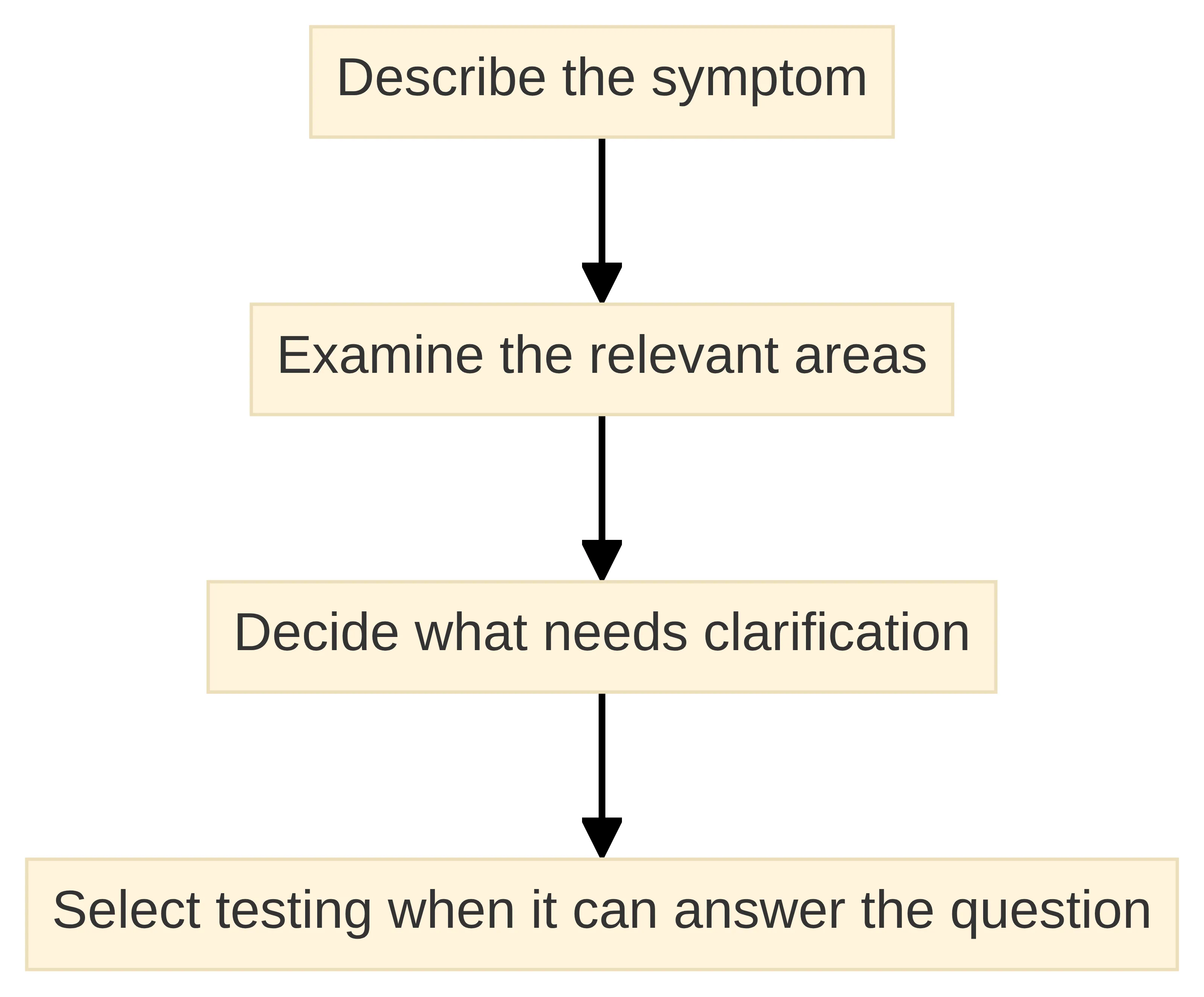
Testing is therefore downstream of the clinical question. The useful sequence is to describe the symptom, examine the relevant areas, decide what needs clarification, and then select testing when it can answer that question. A scan should add information to the evaluation rather than replace the history and examination.
Prepare a Symptom Account That Improves the Next Conversation
A useful symptom account gives your clinician a timeline, a trigger map, and a clear description of function. A comprehensive history helps connect the mechanism with the location of the problem, so write down the details before the appointment rather than relying on memory during a short conversation.
Bring these points:
- When the pain began and whether it started suddenly or gradually.
- Whether a fall, direct impact, new sport, repetitive task, lifting episode, or other overuse preceded it.
- The exact starting point and whether the symptom travels toward the shoulder, elbow, hand, neck, or another area.
- Which movements, positions, pressure, work tasks, sports, or sleep positions trigger or change it.
- Whether exertion brings on the symptom, and whether breathlessness or sweating occurs with it.
- Any tingling, numbness, weakness, clicking, locking, or visible change in shape.
- Which activities you can no longer do comfortably, including reaching, dressing, driving, lifting, gripping, working, or exercising.
- What you have already tried, including rest, activity changes, therapy, injections, or medicines, and what happened afterward.
Bring the names or copies of prior X-rays, MRI reports, ultrasound reports, and treatment records when they are available. A clinician can then decide whether existing information addresses the current question or whether additional assessment is appropriate. Keep the account factual: timing, triggers, associated symptoms, function, prior injury, and treatments tried are more useful than trying to assign yourself a diagnosis. One way to do that is to separate observations from conclusions. Instead of writing “I have a rotator-cuff tear,” note what you felt, what movement changed it, and whether strength or range of motion changed. If the symptom has changed, record the order of those changes rather than only the current worst moment. Also note what is not present when that is relevant to your account, such as no known injury or no change during a particular activity. This does not rule anything in or out; it gives the clinician a clearer starting point and reduces the chance that an assumed label will narrow the conversation before the examination.
If time is limited, lead with four facts: when the symptom began, what changes it, what function has been affected, and whether any warning symptom occurs with it. Add the location and route of the pain, altered sensation, prior injury, and treatments tried. This order helps keep the conversation focused on urgency, localization, and the next clinical question. If more than one pattern is present, do not choose between them before the visit. For example, pain may be activity-linked and persistent, or it may follow an injury while also involving numbness. Report the combination, along with which feature changed first and which now limits function most. A combined account is more informative than a single label because the evaluation is meant to connect timing, location, associated symptoms, and function.
Choose the Appropriate Next Step in Palo Alto or the Bay Area
Cautious monitoring belongs only to a nonurgent pattern that is improving and does not interfere substantially with normal use.
At RegenCore Method, we treat conditions affecting tendons, ligaments, cartilage, muscles, and joints due to osteoarthritis and injury. Our evaluations include a thorough history, hands-on orthopedic exam, diagnostic ultrasound, review of prior MRI or X-ray imaging, and a personalized treatment and recovery plan. That process can help clarify whether a persistent shoulder, upper-arm, tendon, or elbow concern belongs in a non-surgical discussion.
We offer PRP for conditions such as rotator cuff and shoulder tendon injuries, tennis and golfer’s elbow, and other listed tendon and joint conditions. We also offer shockwave therapy for conditions such as rotator cuff and calcific shoulder tendinitis, tennis and golfer’s elbow, and other listed tendon conditions. These are options to discuss after the symptom has been assessed, not conclusions that can be drawn from arm location alone. A qualified clinician must decide whether any approach is suitable for your individual findings.
If urgent concerns have been addressed and the symptom remains persistent or limits your activity in Palo Alto or the Bay Area, an evaluation can turn the broad location into a more specific clinical question. Individual suitability, testing, and treatment decisions require assessment by a qualified clinician.
What Should You Know Before Booking an Upper-Arm or Shoulder Evaluation?
What should I do if I experience sudden severe pain in my left arm?
Seek immediate medical attention if you have sudden severe pain in your left arm, especially if it is accompanied by difficulty moving the arm or a visible change in shoulder shape, as these symptoms may indicate a dislocated shoulder, broken bone, or torn tendon.
When should I consider scheduling a routine evaluation for my arm pain?
Arrange a routine evaluation if your left arm pain is persistent, recurrent, worsening, or limits your normal activities, especially if it does not present with any urgent warning signs.
What information should I prepare before visiting a clinician for my shoulder pain?
Before your visit, prepare a symptom account that includes when the pain started, any triggers, associated symptoms, how it affects your daily activities, and any treatments you have already tried.
What types of evaluations does RegenCore Method offer for shoulder pain?
RegenCore Method offers evaluations that include a thorough history, hands-on orthopedic examination, diagnostic ultrasound, and a review of prior imaging to create a personalized treatment and recovery plan.
Next step
Have a question for RegenCore?
Concierge regenerative & orthobiologic orthopedics in San Francisco and Palo Alto. Research-backed, non-surgical treatment — PRP, bone marrow concentrate (BMAC), stem cell therapy, shockwave, EMTT and spinal disc care — to help the body heal itself.
Get in touch