
natural remedies for back pain and inflammation
Natural Remedies for Back Pain and Inflammation: A Safer Decision Guide
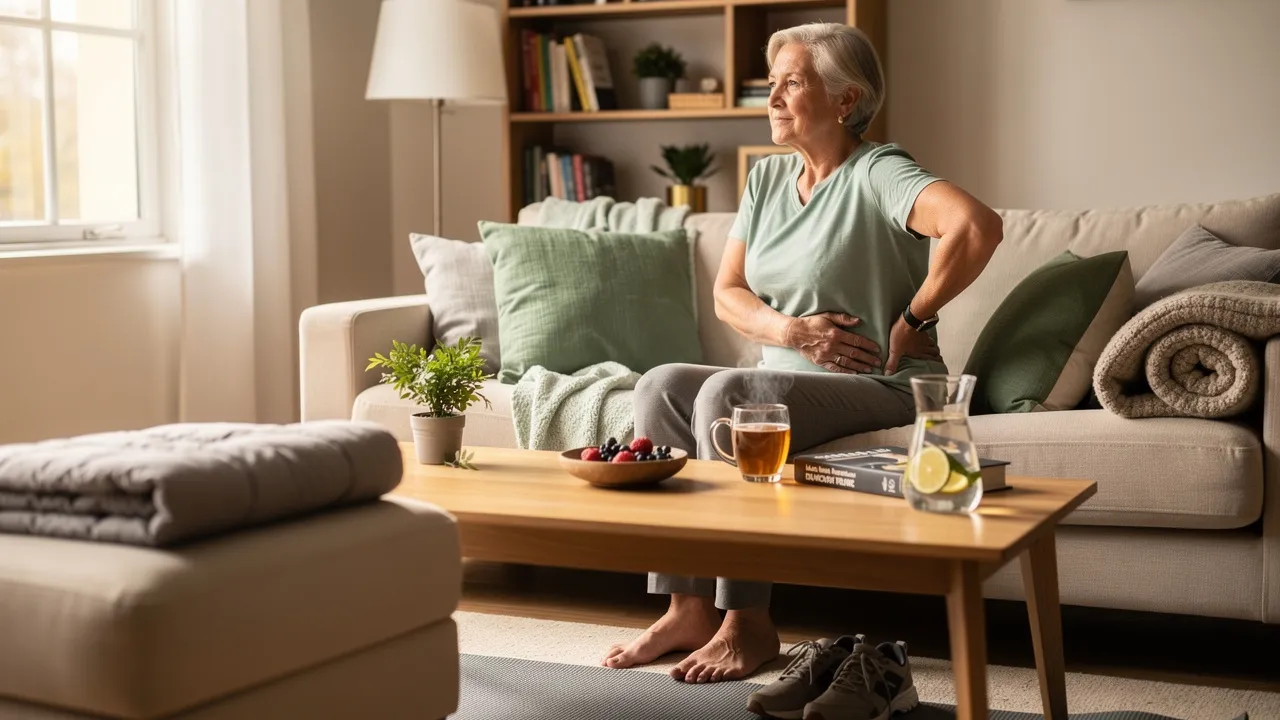
Use an evidence-aware sequence instead of chasing a single remedy
Natural remedies for back pain and inflammation make the most sense as a sequence, not as a search for one perfect food, drink, stretch, or supplement. Start with practical measures that support comfort and movement, pay attention to how long the problem has lasted, and let the pattern of symptoms determine whether home care is still reasonable.
Acute low back pain lasting less than six weeks is generally self-limited when it is uncomplicated and lacks red flags. Chronic low back pain is defined as lumbar pain lasting 12 weeks or more. Those time frames do not diagnose the cause of your pain, but they give you a useful reason to change your next step when symptoms continue.
A practical sequence looks like this:
- Begin with support for movement, comfort, sleep, and daily function.
- Treat sustainable activity and exercise-based care as longer-term foundations rather than relying on passive relief alone.
- Regard herbs and supplements as products that need a separate safety check, not as automatically harmless natural choices.
- Seek assessment when symptoms persist, interfere with function, or include warning signs.
Nonpharmacologic care is first-line for chronic low back pain, although the evidence varies by treatment. Herbal supplements also have limited reliable clinical evidence on efficacy and safety and may involve side effects or drug–herb interactions. The sensible goal is not to promise a cure at home. The goal is to choose a measured starting point and know when to stop managing the problem alone. One way to apply that sequence is to label the purpose of each option before you try it. Is it intended to make comfort easier, support movement and sleep, or claim to correct a cause? Comfort and routine support are limited goals; they do not answer whether a disc, nerve, joint, or another structure is involved. Then define an observable outcome in ordinary life, such as completing a routine task with less disruption, instead of relying on a broad promise about inflammation. Finally, decide in advance what would change your plan: persistence, narrowing function, a new neurological change, or any emergency symptom described later. This turns self-care into a monitored trial rather than an open-ended search for remedies.
Separate symptom support from treating the cause
Natural self-care can support comfort, movement, and daily routines without establishing why your back hurts. Heat, massage, exercise therapy, physical therapy, acupuncture, and other nonpharmacologic approaches may fit within care for chronic low back pain, but the evidence varies by treatment. A measure that makes a day more manageable is not automatically a treatment for a disc problem, nerve involvement, joint problem, fracture, or another source of pain.
That distinction protects you from two opposite mistakes. You do not need to assume that every episode requires an invasive procedure, and you do not need to assume that a natural label makes professional assessment unnecessary. Use symptom support as a way to function while you watch the course, not as proof that the underlying problem has been corrected.
Persistent pain deserves a different question from a short, uncomplicated episode. Chronic low back pain lasts 12 weeks or more, and routine imaging is not recommended for every chronic case.
Warning signs are not diagnoses by themselves. High-quality evidence is lacking for the diagnostic accuracy of most red flags, so they support clinical reasoning rather than settle the cause. Base your decision on the whole pattern: duration, function, neurological changes, trauma or medical history, and how symptoms respond over time.
Begin with sustainable movement rather than bed rest
Sustainable movement is a reasonable foundation when back pain does not require urgent assessment. Exercise-based physical therapy is described as the foundation of treatment for chronic back pain in most cases. Staying active can help reduce chronic back pain symptoms, and guidance for chronic low back pain advises against bed rest.
You do not need to turn this principle into a demanding workout. A useful starting plan is modest and repeatable:
- Keep ordinary movement within a tolerable range instead of treating complete rest as the goal.
- Break long periods of sitting or lying down with brief changes in position when you can do so comfortably.
- Choose an activity level you can sustain rather than testing your back with a sudden increase in loading.
- Track whether movement supports your daily function over the following hours and days.
These are general planning principles, not an individualized exercise prescription. Staying active should not be confused with pushing through every increase in pain. The point of a sustainable plan is to preserve ordinary movement without turning a self-care idea into a personalized exercise prescription. If an activity repeatedly leaves you less able to sleep, walk, work, or complete routine tasks, that response is useful information for reassessing the plan. If movement remains broadly manageable but symptoms continue, the next question is not whether you have tried hard enough; it is whether an evaluation would clarify the cause.
Lifestyle medicine approaches describe sustainable physical activity as one part of a broader plan for lower back pain. Restorative sleep, stress resilience, self-care, social connection, mind-body exercises, and dietary approaches such as a plant-based diet are also included in that framework.
The value of this list is its breadth. Back pain can affect sleep, activity, work, and social routines, so a plan that addresses only the painful area may be difficult to maintain. Pick one manageable habit at a time and judge it by whether it helps you keep functioning without creating a new problem. If pain continues despite reasonable conservative care, persistence is a reason to seek assessment rather than a reason to keep adding home remedies.
Use heat as a simple comfort measure when it fits
Superficial heat may fit mild or moderate nonspecific low back pain when your main goal is short-term comfort. A review reported that continuous, low-level heat therapy provided pain relief and improved muscular strength and flexibility in this setting. The wording matters: the finding concerns nonspecific mild or moderate low back pain, not every cause or severity of back pain.
Treat heat as one comfort option within a wider plan rather than as a test of whether your spine is healing. Stop relying on it as your only approach if pain persists, function declines, or warning signs appear. Heat may make movement feel easier, but temporary comfort does not identify the source of pain.
Heat is a poor substitute for evaluation when the symptom pattern is unusual, worsening, or linked to neurological changes. A warm compress cannot tell you whether pain comes from muscles, a disc, a joint, or another structure. Use the response as information about comfort only, not as confirmation of a diagnosis.
Build the rest of the self-care plan around daily habits
Daily habits can support a back-pain plan when they are chosen for consistency. Lifestyle strategies described for lower back pain include sustainable physical activity, restorative sleep, stress resilience, meaningful social connection, self-care, mind-body exercises, and dietary approaches such as a plant-based diet. Staying active and maintaining a healthy weight can also help reduce chronic back pain symptoms.
Use those categories to make a simple plan:
- Movement: Keep activity sustainable and adjust the amount to your current tolerance.
- Sleep: Protect a regular opportunity for restorative sleep instead of treating poor sleep as unrelated to your overall health.
- Stress: Include a mind-body practice or quiet routine that you can repeat without adding strain.
- Connection: Let trusted people know when pain is affecting your routine or activity.
- Self-care: Keep track of which measures support ordinary tasks and which leave you worse afterward.
- Food pattern: Favor a broad, sustainable dietary approach over a single-item promise.
Sustainable activity may be more useful than an ambitious plan that lasts two days. A sleep routine may support overall coping, but it does not establish why the pain is present. Social connection may make it easier to stay engaged with ordinary life without treating it as a replacement for care.
Write down the few habits you are willing to maintain and the practical change you are watching for, such as being able to complete a normal walk or household task. If pain remains unresolved despite conservative measures, move from habit tracking to clinical assessment. Routine imaging is not recommended for every chronic case, but unresolved pain is one circumstance in which imaging may be indicated. That decision is separate from deciding whether a daily habit is worth continuing. A habit can be useful because it supports sleep, movement, or ordinary tasks even when it has not answered why the pain is present. Conversely, a habit that feels acceptable should not be treated as evidence that the underlying problem has resolved. Look for a practical change that can be described clearly: a more manageable walk, less disruption to sleep, or greater ability to complete a routine task. If no meaningful change occurs, or if function continues to narrow, the information from that trial supports moving toward assessment rather than endlessly expanding the list of remedies. Keeping the plan small also makes it easier to notice what coincides with improvement or worsening without claiming that any one habit caused the change.

Consider gentle movement practices and hands-on comfort carefully
These practices have different roles in movement and muscle comfort. Movement therapies such as yoga and tai chi can help stretch and strengthen back muscles, while therapeutic massage may relax aching muscles. Massage and other nonpharmacologic approaches are among the options discussed for chronic low back pain, but evidence varies across treatments.
Think of these practices as ways to work with comfort, mobility, and routine. Do not use a class, massage session, or online demonstration as proof that a particular structure is injured or that a disc problem has been corrected. A practice that feels manageable for you may not fit another symptom pattern, so keep the focus on your response and on whether ordinary function is improving.
A measured choice starts with the purpose of the activity. If you want relaxation, hands-on comfort may be the relevant aim. If you want a repeatable movement routine, a gentle mind-body practice may be more practical. If persistent pain or limited function remains the main issue, an assessment may answer a more useful question than adding another technique.
Avoid turning gentleness into a promise of universal suitability. Stop treating self-care as sufficient when the pain is worsening, your function is narrowing, or the warning signs in this guide apply.
Treat foods and drinks as supportive habits, not substitutes for evaluation
The lifestyle medicine approach includes dietary patterns such as a plant-based diet alongside physical activity, sleep, stress resilience, social connection, and self-care. That is different from showing that one ingredient reliably resolves back pain or inflammation.
A practical dietary decision therefore focuses on a pattern you can sustain rather than on a headline about a particular item. Consider whether a change fits your usual meals, budget, culture, and other health needs. Avoid making a sweeping change solely because a food is described as natural or anti-inflammatory. The useful question is whether the overall habit supports your health while you continue to judge the back problem by symptoms and function.
Foods and drinks cannot tell you what is causing your back pain. A beverage may be part of your routine without treating a disc-related problem, and a dietary change may support general health without replacing evaluation. Keep those claims separate.
If you are comparing two eating approaches, use clear criteria:
- whether you can maintain the pattern over time;
- whether it provides an adequate range of foods for your existing needs;
- whether it fits your household, budget, and culture; and
- whether the change supports rather than distracts from movement or assessment.
Do not let a single food delay care for persistent or concerning symptoms. A broad health-supporting habit can sit alongside professional care; it should not be used to avoid it when the course calls for evaluation. Because the evidence here addresses a dietary approach rather than individual foods or drinks, it cannot rank a strongest anti-inflammatory food or beverage for back pain. That is a limit on the conclusion, not proof that every dietary choice has the same effect. Keep certainty proportional to the evidence: a sustainable food pattern may be worth pursuing for general support, while persistent or concerning back symptoms still need to be judged through duration, function, and clinical assessment.

Approach herbs and supplements with extra caution
Herbal supplements deserve a separate safety decision because reliable evidence on their efficacy and safety is limited. A review connected that uncertainty in part to limited regulatory scrutiny and identified possible side effects and drug–herb interactions. A product can therefore have a natural origin without having dependable evidence for back pain or a predictable safety profile.
Use a higher bar before adding an herb or supplement:
- Ask what specific outcome the product is supposed to change.
- Look for evidence about that outcome rather than relying on a general claim about inflammation or wellness.
- Treat possible side effects and drug–herb interactions as part of the decision.
- Avoid stacking several products, which makes it harder to identify what caused a benefit or problem.
- Reassess whether the product is delaying evaluation or replacing a more useful plan.
Supplement uncertainty is a reason for caution, not a reason to assume that every product is dangerous or useless. It means the claim, product, interactions, and personal circumstances matter. Do not present an herb as an established treatment when the available review describes limited reliable evidence.
If a supplement is part of your routine, include it when your medicines and health history are reviewed. The interaction risk makes that information relevant. Persistent back pain still needs to be judged by duration, function, and warning signs rather than by whether a supplement feels promising.
Know when home care should give way to evaluation
New bladder dysfunction or altered saddle-area sensation requires emergency care. Bladder changes can include difficulty starting urine, dribbling, incomplete emptying, loss of the usual sensation of bladder fullness, urinary retention, or incontinence. Altered saddle-area sensation means a new change in feeling around the area that contacts a saddle, including during wiping.
Guidance recommends same-day MRI for people with symptoms of possible cauda equina syndrome, regardless of how mild those symptoms seem. Do not wait to see whether heat, stretching, a dietary change, or a supplement resolves these particular symptoms. Seek emergency care instead.
Focal spinal tenderness, neurological defects, significant trauma, or a history of malignancy should prompt medical evaluation. When fracture is suspected, plain radiographs are warranted, and signs of cord compression require emergent MRI. Serious spinal pathology is rare, but its consequences can be devastating or life-limiting, which is why concerning patterns need early attention.
Red flags support clinical reasoning; they do not establish a diagnosis by themselves. Their diagnostic accuracy often lacks high-quality evidence, so do not use one isolated feature to diagnose yourself or to dismiss the rest of the pattern. Give the full history to the clinician evaluating you.
Persistent symptoms or unresolved loss of function are also reasons to move beyond repeated home experiments. Chronic low back pain means lumbar pain lasting 12 weeks or more.
Use persistence as a decision point rather than as a challenge to keep trying remedies indefinitely. If you cannot carry out ordinary responsibilities, activity, or movement in the way you normally can, record that change and arrange assessment. The escalation routes are not all interchangeable. New bladder dysfunction or altered saddle-area sensation belongs in the emergency route described above. Other concerning findings warrant medical evaluation, while persistent loss of function supports arranging an assessment even when the situation is not an emergency. A symptom’s not being an emergency does not make it something to ignore, and its presence does not establish a diagnosis. Describing when the change began, how it affects ordinary activity, and what self-care measures have already been tried can help keep the evaluation focused without turning those observations into a self-diagnosis. You can organize the decision into three lanes: emergency care for new bladder dysfunction or altered saddle-area sensation; prompt medical evaluation for findings such as significant trauma, focal spinal tenderness, neurological defects, or a history of malignancy; and a planned assessment for persistent pain or loss of function without those emergency features. These lanes are not diagnoses and they do not replace a clinician’s judgment. They simply prevent a reassuring home-care response from overriding a symptom pattern that calls for a different level of attention.

Connect persistent or disc-related symptoms to a local non-surgical spine assessment
That service is a possible next conversation when your symptoms persist or when a disc-related concern needs focused assessment; it is not a promise that a particular treatment will suit you or produce a particular result.
A local evaluation can help organize the question you are trying to answer: whether your symptoms fit a spinal disc concern, whether prior imaging is relevant, and which conservative options should be discussed. You do not need to turn a search for natural self-care into a commitment to a procedure. The purpose of assessment is to replace guesswork with a clearer understanding of the problem and the available choices.
RegenCore Method’s concierge approach also frames this conversation as a broader orthopedic evaluation rather than an automatic disc diagnosis. When relevant, that approach includes detailed orthopedic evaluation, imaging review, and a personalized treatment plan addressing mechanical alignment, aging articulation, lifestyle factors, and trauma. These are assessment considerations, not conclusions about an individual reader. This broader frame can help when the word "inflammation" does not explain what structure or condition is involved. It keeps two decisions separate: whether a natural measure is supporting comfort or daily routine, and whether a spinal disc option belongs in the professional discussion. It also gives the reader a practical criterion for seeking assessment: uncertainty about the source is more important than finding a remedy with the most appealing label. An evaluation does not commit you to a procedure or establish that one is needed; it creates an opportunity to review findings, discuss non-surgical options, and decide what information is still missing. The purpose remains clarification, not a treatment promise.
For readers considering a non-emergency visit in Palo Alto, RegenCore Method’s address is 2248 Park Blvd., Palo Alto, CA 94306. Convenience can help with planning, but location does not change the emergency route for new bladder dysfunction or altered saddle-area sensation.
Our spinal disc treatment service addresses degenerative disc disease, disc bulges and herniations, sciatica and radiating leg pain, facet and sacroiliac joint pain, chronic low back and neck pain, and people wanting to avoid fusion or opioids. Those are the conditions and concerns our service page identifies; they are not a diagnosis of your symptoms.
If you are in Palo Alto, San Francisco, or the surrounding Bay Area and your symptoms remain persistent, function-limiting, or disc-related, bring the timeline of your pain, changes in sensation or strength, prior imaging, and the self-care measures you have tried to your evaluation. The assessment can then address whether spinal disc care is relevant rather than assuming that it is.
Choose the next measured step
Your next step depends on the course and the symptom pattern. For uncomplicated acute low back pain lasting less than six weeks without red flags, practical self-care and observation may be reasonable. For chronic pain that does not resolve with conservative care, or for pain accompanied by red flags, a professional assessment is the more useful next step than adding another remedy. Routine imaging is not recommended for every chronic case, but persistent pain, red flags, or a neuromuscular deficit can make imaging appropriate.
Keep the decision simple:
- Continue measured self-care when symptoms are uncomplicated and daily function is stable.
- Arrange evaluation when symptoms persist, function remains limited, or the pattern suggests a disc or nerve concern.
- Seek emergency care for new bladder dysfunction or altered saddle-area sensation.
- Seek medical evaluation after significant trauma, with focal spinal tenderness, neurological defects, or a history of malignancy.
A qualified professional determines individual suitability for any treatment.
What should I know before choosing a natural remedy or spinal evaluation?
What is the strongest natural anti-inflammatory for back pain and inflammation?
There is no established single natural remedy that reliably treats back pain or inflammation. A sustainable pattern involving activity, restorative sleep, stress management, self-care, and a broad dietary approach may support overall health, while heat or other nonpharmacologic measures may help comfort. These steps do not identify or correct the cause of back pain.
What drink is good for back pain?
The available evidence does not establish a specific drink as a treatment for back pain. Choose beverages as part of a sustainable eating and hydration routine rather than expecting one drink to resolve pain or inflammation. Persistent symptoms should be judged by their duration, effect on function, and warning signs—not by whether a beverage seems helpful.
Are herbs and supplements safe for back pain?
Not automatically. Herbal supplements have limited reliable evidence for effectiveness and safety, and possible concerns include side effects and drug–herb interactions. Before adding one, consider the specific claim, avoid combining multiple products, and include the supplement in a review of your medicines and health history.
When should back pain be treated as an emergency?
Seek emergency care for new bladder dysfunction—such as difficulty starting urination, incomplete emptying, retention, or incontinence—or a new change in sensation around the saddle area. Same-day MRI guidance applies when these symptoms suggest possible cauda equina syndrome. Significant trauma, focal spinal tenderness, neurological defects, or a history of malignancy also warrant prompt medical evaluation, while persistent pain or loss of function should prompt assessment rather than endless home experimentation.
Next step
Have a question for RegenCore?
Concierge regenerative & orthobiologic orthopedics in San Francisco and Palo Alto. Research-backed, non-surgical treatment — PRP, bone marrow concentrate (BMAC), stem cell therapy, shockwave, EMTT and spinal disc care — to help the body heal itself.
Get in touch